A contractor called us last year after a 14-foot retaining wall on the West Mesa started bowing inward just two months after backfill. The original design hadn't accounted for the collapsible soils that are common across Albuquerque's alluvial fans. That kind of failure is expensive and dangerous. Our retaining wall design process starts with a thorough subsurface investigation, because in this city the ground beneath your project can change dramatically within a block. We look at soil type, groundwater, and slope geometry before we ever size a wall. For sites near the Rio Grande we also evaluate liquefaction potential and include that in the global stability check. Every design we deliver follows IBC 2021 and ASCE 7-22, with a minimum factor of safety of 1.5 for sliding and overturning. It's not just about holding dirt back; it's about making sure the wall performs for decades under Albuquerque's freeze-thaw cycles and monsoon rains.
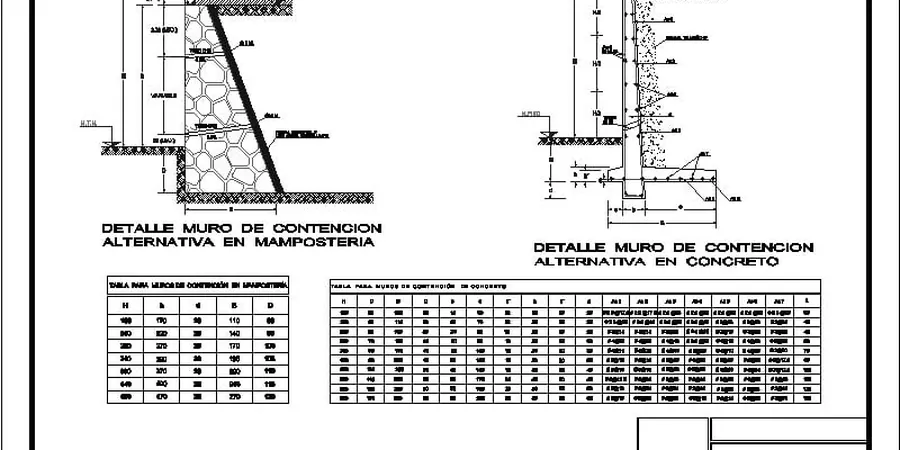
A retaining wall in Albuquerque is only as good as its subsurface drainage and its ability to handle collapsible soils under sudden monsoon saturation.
Scope of work
Area-specific notes
When our field crew mobilizes to a retaining wall site in Albuquerque, the first thing we set up is a portable drill rig with continuous sampling capability. The Rio Grande Valley floor is notorious for interbedded sands and clays that can fool an inexperienced driller. If you only sample every five feet, you might miss a two-foot clay lens that could cause differential settlement behind the wall. We run SPT tests per ASTM D1586 at one-foot intervals in the upper 20 feet, and we log every change in strata immediately. That level of detail is what separates a wall that lasts 50 years from one that needs repair in five. We've seen too many projects in Albuquerque where the geotechnical report was thin and the wall ended up with cracks or rotation within months.
Standards used
IBC 2021 – Chapter 18 (Soils & Foundations), ASCE 7-22 – Seismic Loads & Site Classification, ACI 530 / TMS 402 – Masonry Wall Design, AASHTO LRFD Bridge Design Specifications (for MSE walls), ASTM D1586-18 – Standard Test Method for SPT
Linked services
Site-Specific Retaining Wall Design
Full geotechnical investigation with SPT borings, lab classification (ASTM D2487), and structural design for cantilever, gravity, and MSE walls. Includes drainage design and seismic load calculations per ASCE 7.
Seismic & Lateral Earth Pressure Analysis
We calculate active, passive, and at-rest pressures using site-specific soil parameters. For projects in seismic zones D or higher we include pseudo-static analysis per Mononobe-Okabe method.
Wall Stability & Foundation Check
Overturning, sliding, bearing capacity, and global slope stability analysis. We use software like Slide and LPile to verify factors of safety, and we check foundation settlement under wall loads.
Drainage & Backfill Specification
We design subsurface drainage systems (perforated pipe, granular blanket, geotextile filter) and specify backfill material gradation and compaction requirements to prevent hydrostatic pressure buildup.
Typical parameters
Common questions
What is the difference between a cantilever retaining wall and an MSE wall?
A cantilever wall uses a concrete stem and base slab that resist overturning through its own weight and the soil above the heel. An MSE wall uses layers of geogrid or steel strips embedded in granular backfill to create a reinforced soil mass that acts as a gravity structure. MSE walls are usually more economical for heights above 15 feet and tolerate differential settlement better. Cantilever walls are common for shorter heights and tighter property lines.
How much does retaining wall design cost in Albuquerque?
For a typical residential or small commercial wall up to 10 feet tall, design fees range between US$970 and US$3,680 depending on site complexity, number of borings, and whether seismic analysis is required. This includes field investigation, lab testing, calculations, and a stamped report. Larger walls or those requiring global stability analysis may fall at the higher end of that range.
Do I need a retaining wall permit in Albuquerque?
Yes. The City of Albuquerque requires a building permit for any retaining wall over 4 feet in height. Walls over 6 feet also require a geotechnical report and a stamped design from a licensed professional engineer. Even if your wall is under 4 feet, if it supports a surcharge (like a driveway or building) or is located near a property line, the building official may still require engineered plans.