Albuquerque sits at an elevation of 5,312 feet and experiences over 280 sunny days per year, but beneath that dry surface lies a complex mix of alluvial sands, silts, and caliche layers that can fool conventional testing. The Ménard pressuremeter test (PMT) gives us a direct read of soil stiffness and limit pressure in place, which is critical when designing foundations for the city's growing downtown and suburban developments. Before we drill a borehole for the PMT probe, we often combine it with a granulometry analysis to classify the soil matrix and a plate load test for shallow foundation verification. This trio of tests ensures that the design parameters match what the ground actually delivers.
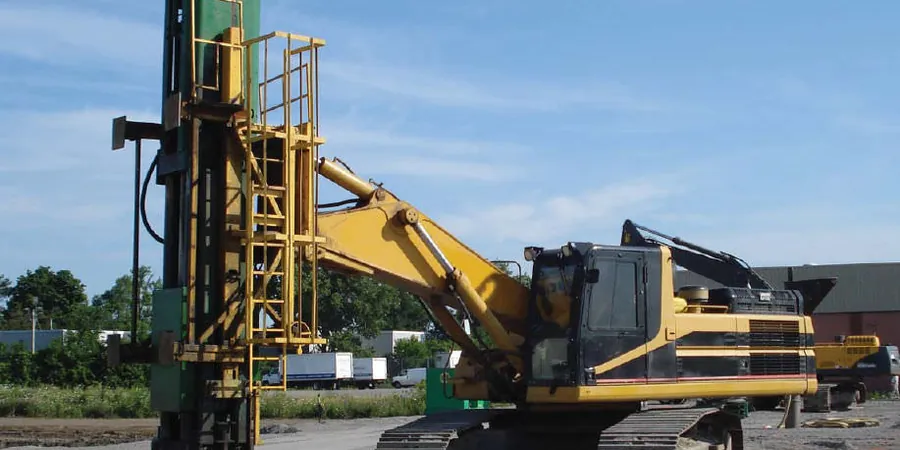
The Ménard pressuremeter test provides in-situ soil modulus and limit pressure, essential for foundation design in Albuquerque's variable alluvial and caliche soils.
Scope of work
Area-specific notes
Our crew deploys a two-axle truck-mounted drill rig with a hydraulic feed system to advance the borehole cleanly to the target depth. The pressuremeter probe is lowered into the hole and inflated incrementally while the data logger records pressure and volume in real time. In Albuquerque's caliche layers, we sometimes encounter probe refusal due to cementation; in those cases we pre-drill with a carbide bit before inserting the probe. The team monitors for borehole collapse, especially in loose sands below the water table, and maintains a mud column if needed. Post-test data reduction uses standard correction curves for membrane stiffness and system compliance.
Standards used
ASTM D4719-20, ASCE 7-22 (Chapter 12, seismic foundation loads), IBC 2021 (Section 1806, allowable bearing pressures)
Linked services
Standard Ménard Pressuremeter Test (PMT)
Monocell probe, gas-inflated, for sands and stiff clays. Provides EM and pl at depths up to 30 m. Ideal for foundation design and settlement analysis.
Tricell Pressuremeter Test
Three-cell probe for soft clays and loose silts where lateral strain must be measured independently. Used in Rio Grande floodplain deposits.
Pre-drilled Caliche Investigation with PMT
Carbide-tipped pre-drilling through cemented caliche layers before probe insertion. Ensures reliable test results in Albuquerque's hardpan zones.
Typical parameters
Common questions
What does the Ménard pressuremeter test measure?
It measures the in-situ stress-strain response of soil by inflating a cylindrical probe in a borehole. The test yields the Ménard modulus (EM), which reflects soil stiffness, and the limit pressure (pl), which indicates ultimate bearing capacity. These parameters are used directly in foundation settlement and bearing capacity calculations.
How deep can the PMT be performed in Albuquerque?
Typically up to 30 meters, depending on borehole stability and access. In the Rio Grande valley, depth may be limited by groundwater or loose sands, but we can maintain a mud column to stabilize the hole. In caliche zones, pre-drilling may be required for deeper tests.
How much does the Ménard pressuremeter test cost in Albuquerque?
The typical cost ranges between US$1,130 and US$1,240 per test depth, depending on site access, depth, and number of tests. Volume discounts apply for multiple depths on the same borehole. Contact us for a firm quote based on your project scope.
What standard does the pressuremeter test follow?
We follow ASTM D4719-20, which covers probe calibration, inflation procedure, and data reduction. The test is also referenced in ASCE 7 and IBC for foundation design parameters. Our lab is ISO 17025 accredited for this test method.