Anyone who has worked on roads in Albuquerque knows that the biggest threat isn't always the lack of rain — it's what happens when the occasional heavy storm hits. The city sits at 5,312 feet in the Rio Grande valley, where summer monsoons can drop an inch of water in an hour on soils that are usually bone-dry. When that happens, poorly drained road bases turn into slurry, and pavements fail from the bottom up. That is why geotechnical road drainage here has to account for both the typical aridity and those sudden, high-intensity events. We evaluate infiltration rates, groundwater depth, and soil permeability before recommending any drainage system. In many projects, we combine this analysis with a permeability field test to measure actual infiltration on site, and with CBR testing to confirm the subgrade strength under saturated conditions. Getting the drainage wrong in Albuquerque means premature cracking and rutting, so the upfront geotechnical work pays for itself fast.
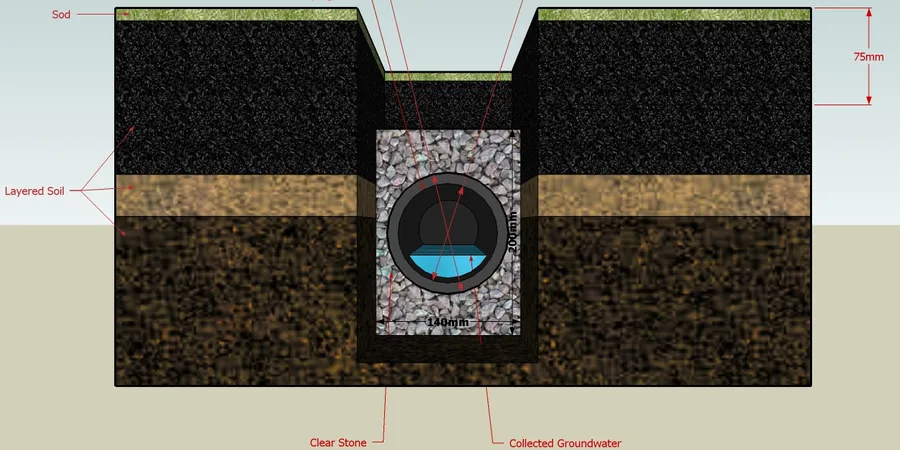
In Albuquerque, a road base that drains well during a monsoon can last three times longer than one that lets water sit.
Scope of work
Area-specific notes
The biggest risk we see on Albuquerque road projects is the assumption that because the climate is dry, drainage can be an afterthought. That assumption usually surfaces during the first big monsoon, when water ponds on the pavement face, infiltrates through cracks, and saturates the subgrade. Without a properly designed geotechnical road drainage system, the result is pumping of fines, loss of support, and alligator cracking within a single season. We use a combination of field permeability tests, soil classification per ASTM D2487, and review of local drainage patterns to avoid these failures. The cost of retrofitting a failed road base is at least three times the cost of getting the drainage right during construction, so we treat this step as non-negotiable.
Standards used
ASCE 7 (hydrologic analysis for drainage), IBC Chapter 18 (subsurface drainage), ASTM D1586 (SPT for subgrade characterization), ASTM D2434 (permeability of granular soils)
Linked services
Subsurface Drainage Design
Layout of subdrain trenches, perforated pipes, and cleanouts based on soil permeability and storm intensity. Includes geotextile selection and outlet protection to prevent clogging by fine silts common in Albuquerque soils.
Erosion & Sediment Control for Road Cuts
Design of slope drains, berms, and energy dissipaters for road cuts and embankments. Focuses on preventing gully erosion during monsoon events while keeping the road structure stable.
Typical parameters
Common questions
Why is geotechnical road drainage different in Albuquerque compared to wetter climates?
Because Albuquerque's soils are typically dry and well-compacted, but they can become nearly impermeable when wetted rapidly. A system designed for constant rainfall would be overbuilt; one designed for aridity alone fails during storms. The right design balances both extremes.
How much does a geotechnical road drainage study in Albuquerque cost?
A typical study ranges from US$800 to US$2,350 depending on the road length, number of test pits, and permeability tests required. Larger arterial projects with multiple drain lines fall at the upper end.
What happens if drainage is ignored during road construction in Albuquerque?
Water trapped under the pavement softens the subgrade, leading to pumping, rutting, and cracking. In some cases, the base layer loses all structural support within two monsoon seasons, requiring full reconstruction.