Under the IBC and ASCE 7 frameworks, a proper geotechnical drainage design is not optional in Albuquerque. The city sits at 5,312 feet elevation with a semi-arid climate, yet sudden monsoon rains cause flash runoff over caliche and alluvial fans. Without engineered drainage, water accumulates behind retaining walls and foundations, triggering hydrostatic pressure and soil softening. Our team integrates site-specific infiltration rates and surface grading to meet code, preventing long-term damage. Before finalizing the drainage layout, we often run a permeability field test to confirm the soil's actual infiltration capacity, and a granulometry analysis to classify the particle distribution of the native material.
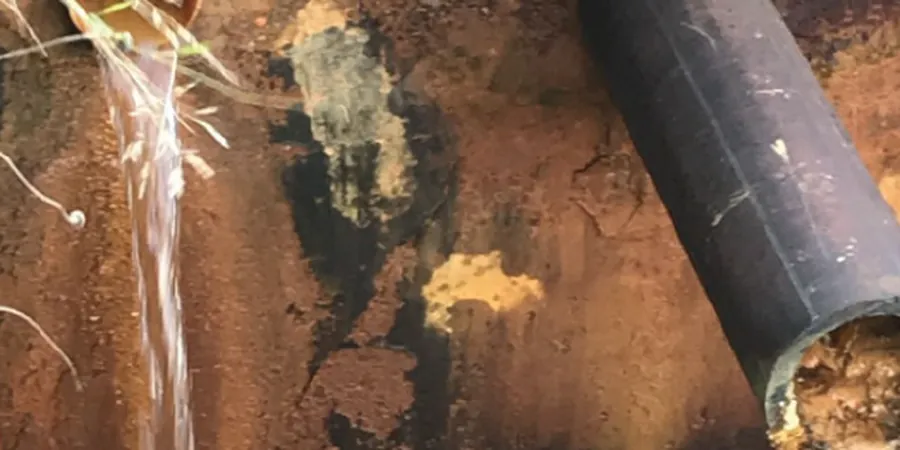
Caliche layers in Albuquerque can block vertical drainage entirely; a proper geotechnical drainage design must bypass them with lateral collectors to protect foundations.
Scope of work
Area-specific notes
Albuquerque's rapid growth since the 1950s pushed residential and commercial development onto the West Mesa and into arroyos with little natural drainage. Homes built before modern stormwater codes now face basement seepage and slab heave during wet years. A flawed geotechnical drainage design can saturate expansive clays, causing differential settlement and cracked walls. In the worst cases, water migrates under foundations and triggers slope failures on cut-and-fill lots. Our drainage reviews catch these hazards early, recommending surface swales, subdrains, and waterproofing details that align with the local geology and the city's drainage ordinance.
Standards used
IBC Chapter 18 (Soils and Foundations), ASCE 7-22 Section C8.3 (Hydrostatic Loads), ASTM D2434 (Permeability of Granular Soils), ASTM D5084 (Hydraulic Conductivity of Fine-Grained Soils)
Linked services
Site Drainage Investigation
We test infiltration rates at multiple depths using double-ring infiltrometers and borehole permeameters. The data feeds a calibrated drainage model that predicts runoff volumes and groundwater response for the 10-year storm.
Subsurface Drainage System Design
We design interceptor drains, French drains, and blanket drains with perforated pipe, geotextile filter fabric, and clean aggregate. Each layout is dimensioned to handle peak flow without clogging, using local soil gradation data.
Retaining Wall & Foundation Drainage
For walls and deep foundations, we specify weep holes, gravel drains, and waterproof membranes. The design relieves hydrostatic pressure and prevents water migration into the backfill, extending the structure's service life.
Typical parameters
Common questions
Why is geotechnical drainage design especially important in Albuquerque?
Albuquerque has caliche layers that are nearly impervious, plus sudden monsoon storms. Without engineered drainage, water ponds on the surface and seeps into foundations, causing heave in expansive clays and hydrostatic pressure on walls. A site-specific design prevents these failures.
What data do you need to start a drainage design?
We need soil classification (USCS), in-situ permeability test results, the proposed building footprint, and the 10-year storm intensity for the site. If the lot is on a slope, we also require a topographic survey to model surface runoff paths.
How much does a typical geotechnical drainage design cost in Albuquerque?
For a standard residential lot, the design ranges between US$850 and US$2,420. This includes field testing, modeling, and a stamped report. Larger commercial sites with multiple drainage zones cost more due to additional boreholes and modeling time.
Do you coordinate with the city's drainage ordinance?
Yes. Our designs comply with the Albuquerque Stormwater Management Ordinance and the IBC hydrology requirements. We prepare the drainage report and calculations needed for the building permit, so you don't have to go back and forth with the city.