In Albuquerque we deal with a mix of alluvial silts and clay layers left by the Rio Grande, plus caliche lenses that complicate drainage. For a warehouse project near I-25, we designed a preloading scheme without surcharge because the client couldn't add extra fill height. The idea is simple: apply a uniform load equal to the final embankment or slab load, then wait for consolidation. But here you need to know how fast the water can leave. That means running consolidation tests first, and often pairing the analysis with a drainage geotechnical study to check if vertical drains are needed. Without them, secondary compression in those micaceous silts can drag on for months. We also check the subgrade with plate load tests to confirm stiffness gain over time. The whole process needs careful settlement monitoring, not just assumptions.
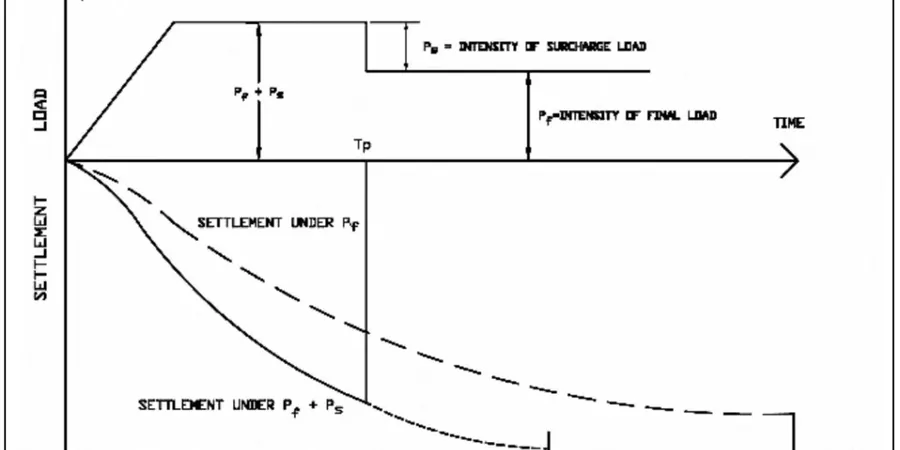
Staged preloading without surcharge can achieve 85% primary consolidation in six weeks on Albuquerque's alluvial silts when drainage is properly designed.
Scope of work
- Initial void ratio and compression index from oedometer tests
- Coefficient of consolidation (Cv) at each load increment
- Pre-consolidation pressure to avoid overstressing
- Field moisture content and unit weight from undisturbed samples
Area-specific notes
Albuquerque lies within the Rio Grande Rift, a seismically active zone. The 2018 M5.0 Socorro earthquake reminded us that ground shaking can trigger excess pore pressure in preloaded fills. If the soil hasn't fully consolidated, a seismic event can cause sudden settlement or lateral spreading. That's why we always check the post-preloading undrained shear strength and run cyclic triaxial tests on representative samples. Another risk: caliche layers can act as capillary barriers, trapping water above and slowing the consolidation front. Ignoring that can lead to differential settlements that crack slabs or tilt bridge abutments. Our preloading designs always include a field verification plan with settlement plates and piezometers to catch these issues early.
Watch how it works
Standards used
ASTM D2435 (Standard Test Methods for One-Dimensional Consolidation Properties of Soils), ASTM D1586-18 (Standard Test Method for Standard Penetration Test), ASCE 7-22 (Minimum Design Loads and Associated Criteria for Buildings), FHWA NHI-05-037 (Soils and Foundations Reference Manual)
Linked services
Staged Fill Preloading
Design of controlled fill placement in increments, with settlement monitoring and pore pressure dissipation checks. Includes field instrumentation and weekly progress reports.
Preloading with Vertical Drains
When natural drainage is slow, we specify prefabricated vertical drains (PVDs) at optimized spacing to accelerate consolidation. Design includes drain pattern, installation depth, and surcharge height calculations.
Typical parameters
Common questions
How long does preloading take in Albuquerque's soils?
Typical durations range from 4 to 12 weeks for primary consolidation, depending on clay layer thickness and drainage path. Staged preloading without surcharge can achieve 90% consolidation in 6-10 weeks for many Rio Grande Valley sites.
What is the difference between preloading with and without surcharge?
Surcharge preloading uses extra fill above the design load to speed up settlement, then removes it. Preloading without surcharge applies exactly the final load, so consolidation takes longer but avoids the cost of importing and removing excess fill.
How much does a preloading design study cost in Albuquerque?
A typical preloading design package including lab testing, settlement analysis, and monitoring plan costs between US$730 and US$2.390, depending on site complexity and number of test locations.
Do I need a geotechnical investigation before preloading?
Yes. You need undisturbed samples for consolidation tests, plus SPT borings to identify layer thickness and groundwater conditions. Without that data, the preloading design is guesswork.
Can preloading fix existing settlement problems?
Preloading is a preventive technique applied before construction. If differential settlement has already occurred, you may need underpinning, grouting, or slab jacking instead.