The difference between building on the West Mesa basalt flows and developing near the Sandia foothills is night and day. In the foothills, you are working with weathered granite colluvium and shallow bedrock, while the mesa sits on thick sequences of Santa Fe Group alluvial sands and clays. For any project involving cut slopes or fill embankments in Albuquerque, monthly geotechnical slope monitoring becomes essential. We have seen how a routine monthly reading of inclinometer casings can catch the onset of creep movement before it turns into a costly failure. Pairing this monitoring with a detailed estudio de mecánica de suelos at the design stage gives you a baseline against which all future measurements are compared.
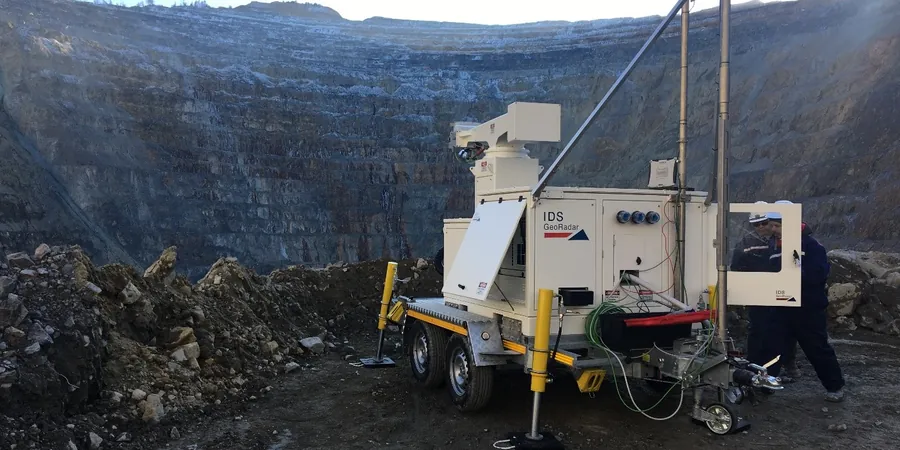
In the Rio Grande Rift, pore pressure changes of just a few feet of head can reduce the factor of safety below 1.3 within a single rainy season.
Scope of work
Area-specific notes
ASCE 7-16 requires that slopes in Seismic Design Category D (which covers most of Albuquerque) be evaluated for post-earthquake stability. The code mandates a minimum factor of safety of 1.1 under pseudo-static conditions. But the real risk in this city is progressive failure triggered by seasonal irrigation and stormwater runoff. The Santa Fe Group sands lose cohesion rapidly when saturated, and the clay layers can undergo cyclic softening. Monthly geotechnical slope monitoring catches these changes early. Without it, a small tension crack can propagate into a full rotational slide that damages roadways, foundations, or utility corridors. Our team follows the FHWA-NHI-05-089 manual for instrumentation planning and alarm criteria.
Standards used
ASCE 7-16 (Seismic Design Category D requirements for slopes), ASTM D6230-19 (Standard Test Method for Monitoring Ground Movement Using Inclinometers), FHWA-NHI-05-089 (Geotechnical Instrumentation for Monitoring Slope Performance)
Linked services
Basic Visual & Manual Monitoring
Monthly site walkovers with crack mapping, surface displacement surveys using total station, and manual water level readings from existing standpipes. Suitable for low-risk embankments and temporary cuts.
Instrumented Monitoring with Inclinometers
Installation of biaxial in-place inclinometers in cased boreholes, connected to an automated data logger. Monthly downloads include displacement vectors at 2-ft intervals and pore pressure readings from vibrating-wire piezometers.
Advanced Real-Time Telemetry System
Full cellular telemetry with hourly data transmission, web-based dashboard, and configurable email/SMS alarms. Includes rainfall gauges and soil moisture sensors. Ideal for high-risk slopes near critical infrastructure.
Typical parameters
Common questions
What is the difference between monthly and continuous slope monitoring?
Monthly monitoring provides a snapshot of movement trends over weeks, using manual or automated readings taken every 28–35 days. Continuous monitoring transmits data every hour or less, which is necessary for active landslides or construction zones. Monthly programs are cost-effective for post-construction verification and routine maintenance of stable to moderately active slopes.
How much does monthly geotechnical slope monitoring cost in Albuquerque?
Typical costs range between US$390 and US$1,200 per month, depending on the number of instruments, data transmission method, and reporting complexity. A basic visual program for two inclinometers with manual downloads runs around US$450/month, while a full telemetry system with 10+ sensors can reach US$1,100–US$1,200/month.
What triggers an alarm during monthly monitoring?
We follow ASTM D6230 thresholds: a displacement rate exceeding 0.25 inches per month, or an acceleration trend where movement speeds up over three consecutive readings. Pore pressure alarms activate when piezometric levels exceed 80% of the hydrostatic head. Any alarm triggers an immediate site visit and a written report within 48 hours.
Do I need a permit to install inclinometer casings in Albuquerque?
Yes, if the boreholes exceed 20 ft depth or are located within the city right-of-way, you need a drilling permit from the Albuquerque Development Review Division. For private property slopes outside the floodplain, a simple land-use authorization usually suffices. Our team handles all permitting paperwork as part of the installation service.