Albuquerque grew rapidly after the railroad arrived in 1880, pushing development onto the Rio Grande valley floor where centuries of floodplain sedimentation left thick deposits of organic-rich silts and clays. Early builders often placed foundations directly on these compressible layers, leading to differential settlement that still plagues historic structures today. Managing organic soil in Albuquerque requires understanding how decomposed plant matter affects bearing capacity and long-term consolidation. We combine field sampling with laboratory analysis, including granulometría to quantify organic content, and ensayo Proctor to determine compaction behavior under varying moisture. This approach gives contractors reliable data before they break ground.
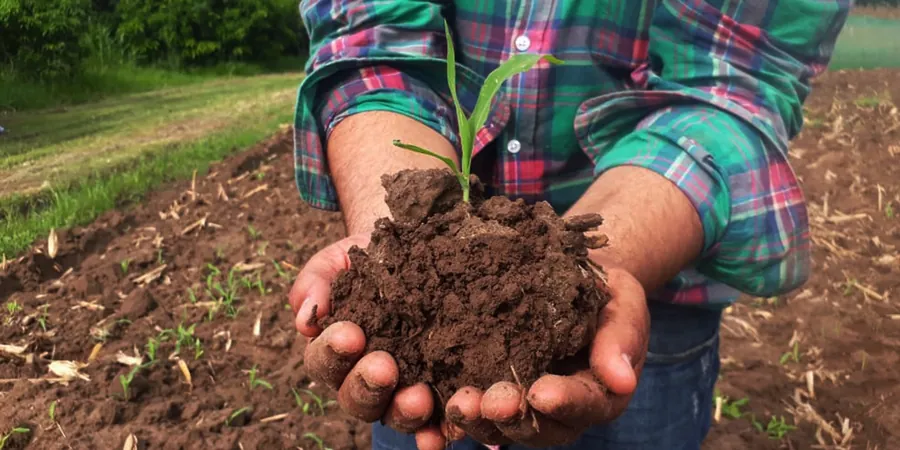
Organic soil pockets in Albuquerque's valley can reduce bearing capacity by 60% compared to adjacent mineral soils—ignoring them guarantees settlement issues.
Scope of work
- Organic matter percentage by dry mass
- pH and sulfate content for concrete durability
- Natural moisture content and Atterberg limits
- Unconfined compressive strength on intact specimens
Area-specific notes
The Rio Grande alluvial plain sits at roughly 1,500 m elevation with a shallow water table—often within 2–4 m of the surface during spring runoff. This creates saturated organic layers that are highly compressible and prone to long-term creep. In our experience, a 1 m thick peat lens beneath a warehouse floor can cause 10–15 cm of total settlement if not preloaded or removed. The bigger risk is differential movement: one column on organic soil settles twice as much as a neighbor on sand, cracking slabs and racking structural frames. We always flag high-organic zones early so engineers can design mat foundations, deep piles, or soil replacement strategies.
Standards used
ASTM D2974-20 (Standard Test Methods for Moisture, Ash, and Organic Matter of Peat and Other Organic Soils), ASTM D2487-17 (Standard Practice for Classification of Soils for Engineering Purposes), IBC Section 1803 (Geotechnical Investigations), NM State Building Code – Appendix C (Soil & Foundation Requirements)
Linked services
Organic Content Testing
Loss-on-ignition analysis at 440°C and 750°C to distinguish humus from peat, with full moisture and ash determination per ASTM D2974.
Consolidation & Settlement Analysis
One-dimensional consolidation tests on undisturbed organic specimens to predict primary and secondary compression rates under design loads.
Remediation Recommendations
Evaluation of over-excavation, preloading, wick drains, or stabilization with cement/lime to improve bearing capacity of organic layers.
Typical parameters
Common questions
How do you sample organic soil in Albuquerque without disturbing its structure?
We use thin-wall Shelby tubes pushed hydraulically into the organic horizon, then seal ends with wax and transport upright to minimize disturbance. For very soft peat, we sometimes use a piston sampler to reduce core loss.
What is the typical cost range for organic soil management testing in Albuquerque?
For a standard residential lot with 3–5 test pits and full organic content analysis, costs range from US$940 to US$2,510 depending on depth, number of samples, and whether consolidation tests are needed.
Can organic soil be compacted to support a foundation?
Generally no. Organic soils have low particle density and high moisture retention, so standard Proctor compaction rarely achieves adequate density. Removal and replacement with imported fill is the most reliable solution.
Does the New Mexico building code require organic soil testing?
Yes. IBC Section 1803.5.2 requires a geotechnical investigation when organic soils are suspected, and the NM State Building Code references ASTM D2974 for organic content determination.