In Albuquerque, one thing we see often is that the high desert climate and the Rio Grande valley geology can create conditions where ground shifts quietly over time. That is why geotechnical instrumentation is not optional for many projects around here. We design and install monitoring systems that track real-time changes in soil behavior. Before we place any equipment, we correlate the site conditions with the expected loads. This often involves reviewing existing borehole data and running a quick MASW Vs30 survey to map the soil profile without drilling. That step helps us decide where to anchor the instruments for the most useful data.
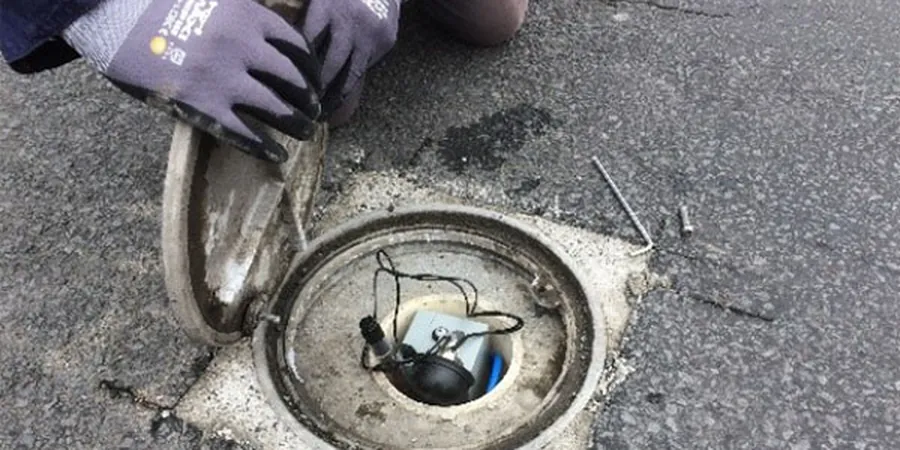
We install inclinometers and piezometers that transmit data directly to your phone, so you see ground movement before it becomes a problem.
Scope of work
- In-place inclinometers for measuring lateral ground movement in excavations and embankments.
- Piezometers to track pore pressure fluctuations, especially critical during monsoon season.
- Settlement plates and extensometers for vertical displacement monitoring beneath fills and foundations.
Area-specific notes
Albuquerque grew rapidly in the post-war era, with many subdivisions built on the alluvial fans west of the Sandia Mountains. Those fans are made of loose, granular soils that can settle unevenly when wetted. In our experience, the biggest risk is differential settlement under structures that were built without geotechnical instrumentation. We have seen parking lots and warehouse slabs tilt more than 5 cm over a decade because nobody was watching the ground. Installing a network of settlement plates and piezometers early in construction lets the contractor adjust compaction or drainage before the slab is poured.
Watch how it works
Standards used
ASTM D6230-19 (Inclinometer calibration and installation), ASTM D4779-19 (Piezometer installation in saturated soils), ASCE 7-22 (Minimum design loads, including soil-structure interaction), IBC 2021 Chapter 18 (Soils and foundations instrumentation requirements)
Linked services
Inclinometer Arrays for Excavations
Permanent or temporary inclinometer casings installed in boreholes adjacent to deep excavations, retaining walls, and slopes. We use digital inclinometer probes with 0.01 mm/m sensitivity and provide monthly reports with displacement vectors. Common on I-25 bridge abutments and downtown high-rises.
Pore Pressure Monitoring Networks
Vibrating wire piezometers placed at multiple depths to track phreatic surface changes. We install them using a fully grouted method to avoid hydraulic short circuits. Data is logged hourly and alarms trigger when pore pressure exceeds 80% of the overburden stress.
Settlement and Heave Monitoring
Automated settlement plates, extensometers, and tiltmeters for foundations, embankments, and retaining walls. We set up real-time alerts via text or email when movement exceeds a user-defined threshold, typically 5 mm for critical structures.
Typical parameters
Common questions
How much does geotechnical instrumentation cost for a typical project in Albuquerque?
For a standard instrumentation package covering inclinometers, piezometers, and settlement plates, the cost typically ranges between US$2,160 and US$4,260 depending on the number of sensors, depth of installation, and remote monitoring requirements. This includes equipment, installation, and 30 days of data logging.
How long does it take to install a piezometer network in the field?
Installation of a three-piezometer array at different depths usually takes one to two days. That includes drilling the borehole, setting the vibrating wire sensors, backfilling with bentonite grout, and connecting the data logger. We schedule around monsoon season to avoid delays from rain.
Do you provide remote data access for instrumentation sites?
Yes. Every system we install includes a cellular-based data logger that uploads readings to a secure cloud portal every hour. You can log in from any device to see graphs, set alarms, and download raw data. No need to visit the site unless the alarm triggers.
What is the difference between an inclinometer and a tiltmeter?
An inclinometer measures lateral displacement along the entire length of a borehole casing, giving you a profile of movement at different depths. A tiltmeter measures the rotation at a single point, usually on a structure surface. For deep excavations in Albuquerque's sandy soils, we generally recommend inclinometers for the wall and tiltmeters for the adjacent building.