In Albuquerque, the geotechnical design of deep excavations must account for the city's position within the Rio Grande rift, where alluvial sands, silts, and gravels interbed with clay lenses down to 30 meters. We follow ASCE 7-22 and IBC 2021 to determine lateral earth pressures and groundwater control for excavations exceeding 4.5 meters. The high water table near the river valley adds complexity, requiring careful seepage analysis and often a combination of soldier piles and lagging with tieback anchors. Our team integrates site-specific soil classification per ASTM D2487 to tailor the shoring system to the actual stratification encountered on each project.
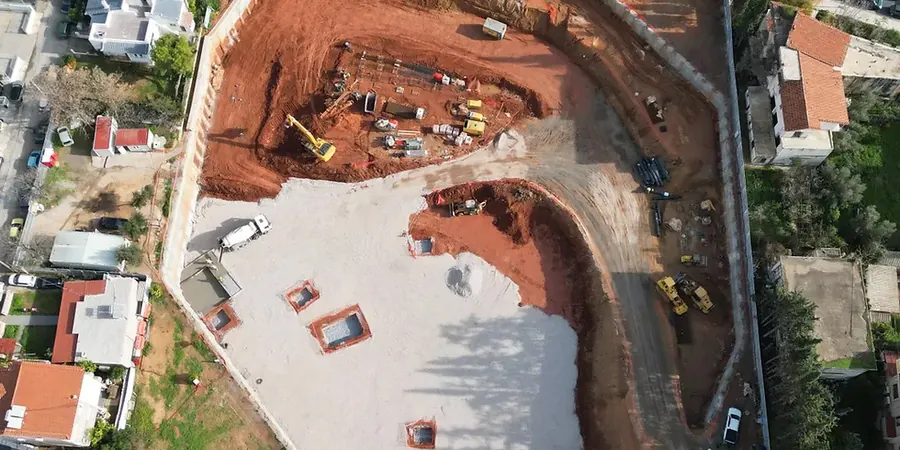
In the Rio Grande alluvium, a 6-meter excavation can see lateral wall movements of 8–12 mm without proper tieback preloading.
Scope of work
Area-specific notes
A common mistake among contractors in Albuquerque is assuming the sandy soils will stand vertically without support for a few days. That assumption has led to multiple cave‑ins near the Big I interchange, where loose sands with less than 5% fines ravel within hours. Without a properly designed soldier pile and lagging system or a secant pile wall, the risk of a catastrophic collapse — and the associated OSHA fines and project delays — is unacceptably high. We always require a minimum stand‑up time analysis based on the actual grain size distribution.
Standards used
ASCE 7-22 (Minimum Design Loads and Associated Criteria), IBC 2021 (International Building Code, Chapter 18), ASTM D1586-18 (Standard Test Method for SPT), ASTM D2487-17 (Standard Practice for Classification of Soils)
Linked services
Soldier Pile and Lagging Walls
Design of H‑pile sections and timber or steel lagging for excavations 3–12 m deep, including tieback anchor layout and preload verification.
Secant Pile Walls
Structural walls formed by overlapping concrete piles, ideal for water cutoff in the high water table zones near the Rio Grande.
Top‑Down Construction Design
Analysis of sequential excavation and slab installation for deep basements, including load transfer and deflection control.
Groundwater Control Systems
Design of deep wells, eductor systems, and cutoff walls to maintain dry conditions during excavation in the alluvial aquifer.
Typical parameters
Common questions
What is the typical cost range for geotechnical design of deep excavations in Albuquerque?
For a standard excavation 6 m deep and 30 m long, the design and analysis phase typically falls between US$1.910 and US$4.220, depending on the number of soil borings and the complexity of groundwater control required.
How does the Rio Grande water table affect deep excavation design?
The water table in the Rio Grande valley can be as shallow as 1.5 m below the surface after spring runoff. This requires either a dewatering system or a water‑tight secant pile wall to prevent piping and base instability during excavation.
What factor of safety is required for temporary shoring walls under IBC?
IBC 2021 mandates a minimum factor of safety of 1.5 against sliding and overturning for temporary shoring. For permanent walls, the factor increases to 1.7, and all designs must also check global stability with a factor of 1.3.