Albuquerque sits at an elevation of 5,312 feet, wedged between the Sandia Mountains and the Rio Grande. That geography funnels seasonal runoff into dozens of arroyos, especially during the monsoon season from July to September. For properties near the mountain front or within a mapped alluvial fan, a debris flow analysis is not optional — it is a critical step to quantify the volume, velocity, and runout distance of potential sediment-laden flows. The city has seen damaging events in Foothills neighborhoods after intense thunderstorms. We combine LiDAR topography, historical rainfall records, and field reconnaissance to model flow paths. Before running the analysis, we often cross-check soil stratigraphy with a program of calicatas exploratorias to verify depth to bedrock and colluvial thickness.
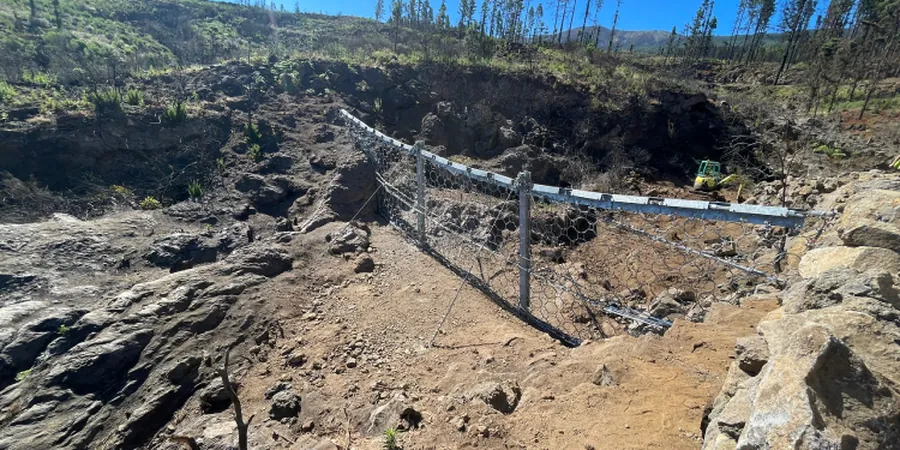
A single monsoon storm can mobilize thousands of cubic yards of debris from a one-square-mile watershed above Albuquerque’s Foothills.
Scope of work
- Watershed delineation and peak discharge estimation (rational method, SCS curve number)
- Bulk density and yield strength from lab testing of colluvial samples
- Runout modeling using FLO-2D or DAN3D for flow depth and impact pressure
Area-specific notes
In Albuquerque, many older subdivisions were plotted before modern debris-flow mapping existed. We frequently see homes built directly on alluvial fans with no deflection walls or basin upstream. The real risk is not just the initial surge — it is the secondary scour around foundations and the plugging of undersized culverts beneath residential streets. A debris flow analysis identifies these choke points and recommends mitigation: check dams, sediment basins, or channel armoring. Without it, a 30-minute storm can cause structural damage that takes months to repair.
Standards used
ASCE 7-16 (Chapter 6: Tsunami and Inundation – applicable by analogy for debris loads), FEMA Alluvial Fan Flooding Guidelines (FEMA-1, 2014), USGS Open-File Report 2008-1130 (Debris-Flow Hazard Assessment Methods)
Linked services
Watershed and Runout Modeling
LiDAR-based terrain analysis, hydrologic modeling (HEC-HMS), and debris-flow runout simulation using FLO-2D to map hazard zones on your property.
Field Sampling and Lab Characterization
On-site bulk sampling of colluvium and alluvial fan deposits; laboratory testing for grain-size distribution, plasticity, and sediment concentration.
Mitigation Design Review
Design and check of check dams, debris basins, and diversion walls per local drainage codes and ASCE 7 debris-load provisions.
Typical parameters
Common questions
What is a debris flow analysis and why do I need one in Albuquerque?
A debris flow analysis predicts how fast and how far a mud-and-rock slurry will travel after a heavy rain. In Albuquerque, the steep canyons of the Sandias and the network of arroyos make many foothill and west-side properties susceptible. The analysis helps you site buildings above the flow path or design deflection structures.
How much does a debris flow analysis cost in Albuquerque?
For a typical single-lot or small subdivision analysis, the cost ranges between $1,320 and $4,420 depending on catchment size, number of scenarios modeled, and whether you need full mitigation design. Complex multi-watershed projects for larger developments can exceed that range.
What data do you need from me to start the study?
We need a site plan or plat map showing existing buildings, drainage patterns, and any previous flood studies. If available, a survey of the catchment topography (contour map or LiDAR) speeds up the modeling. We handle the rest: field reconnaissance, soil sampling, and rainfall analysis.
How long does a typical debris flow analysis take?
Most single-lot analyses are completed in 3 to 5 business days after field data collection. Larger developments with multiple watersheds may require 2 to 3 weeks. We prioritize projects during monsoon season when permits are often expedited.
Will the analysis satisfy the City of Albuquerque building department?
Yes. Our reports follow the ASCE 7 debris-load provisions and the FEMA alluvial fan guidelines accepted by the city's Development Review Board. We include a hazard zone map, flow depth and velocity contours, and recommended mitigation measures that meet local code.