Slope engineering in Albuquerque is not merely about moving earth; it is a critical discipline that protects lives, property, and infrastructure from the inherent instability of the Rio Grande Valley's margins and the adjacent Sandia Mountains. This category encompasses the comprehensive assessment, design, and stabilization of natural and man-made slopes, integrating geology, hydrology, and structural mechanics. For a city experiencing rapid expansion into its picturesque but challenging foothills, ensuring slope integrity is the foundational first step for any hillside development, roadway expansion, or drainage project.
The region's unique geology demands specialized attention. Albuquerque sits on a complex interface where the alluvial fans of the Rio Grande Rift meet the uplifted fault blocks of the Sandia and Manzano Mountains. This creates a heterogenous subsurface of poorly consolidated sands, gravels, and silts, often interbedded with colluvium and ancient landslide debris. The semi-arid climate belies a critical instability trigger: intense summer monsoonal rains. These cloudbursts rapidly saturate these loose, dry soils, dramatically reducing their shear strength and generating pore-water pressures that lead to surficial sloughing and deep-seated failures, particularly on cut slopes that have exposed these weak formations.
Navigating the regulatory framework is a mandatory component of all slope work in the Albuquerque area. Projects must conform to the City of Albuquerque's Development Process Manual and the adopted International Building Code (IBC) with local amendments, which govern grading, excavation, and foundation design. Crucially, the New Mexico Environment Department's Construction General Permit (CGP) enforces strict stormwater pollution prevention plans (SWPPP) to control erosion from denuded slopes. For any slope exceeding a 2:1 (horizontal:vertical) inclination or taller than 10 feet, a professional geotechnical investigation and a slope-specific design, often requiring a slope stability analysis, are not just best practice but a prerequisite for permit approval.
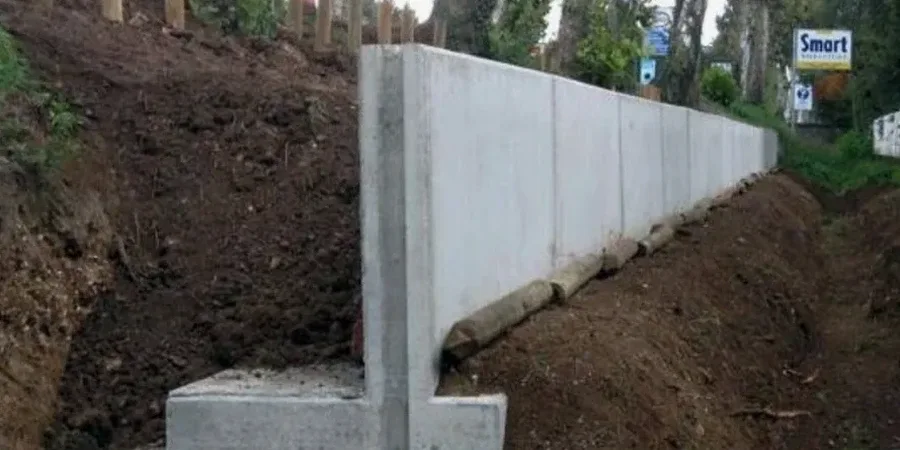
The applications for these specialized services are diverse and essential. Residential developers carving out lots in the Northeast Heights rely on robust slope engineering to prevent foundation distress and yard loss. Civil infrastructure projects, such as the widening of Tramway Boulevard or the construction of new arroyo crossings, demand permanent cut and fill slopes that can withstand both static and seismic loads. Commercial developments on mesa tops frequently require the design of retaining walls to create usable space while stabilizing near-vertical transitions. For remediating existing landslides or stabilizing critical rock cuts along I-40 through Tijeras Canyon, advanced structural solutions like active/passive anchor design become the definitive intervention, tying unstable masses back to competent bedrock.
Common questions
What are the primary triggering factors for slope failures in Albuquerque?
The most common trigger is rapid water infiltration from intense summer monsoon rains, which saturates the loose, sandy alluvial soils and colluvium, reducing their shear strength. Other key factors include improper grading that over-steepens natural slopes, uncontrolled irrigation or broken utilities, and undercutting from arroyo erosion during flash floods. Seismic shaking, though less frequent, is also a critical design consideration.
When is a geotechnical investigation mandatory for a slope project in Albuquerque?
A geotechnical investigation is mandatory per the City of Albuquerque's grading regulations for any cut or fill slope exceeding 10 feet in vertical height or steeper than a 2:1 (horizontal:vertical) inclination. It is also required for any development in a mapped geologically hazardous area, such as an ancient landslide complex or an area with known collapsible soils, to assess deep-seated stability and foundation suitability.
What is the difference between a gross stability failure and a surficial slough?
A gross stability failure is a deep-seated rotational or translational landslide that extends well below the slope's toe, involving a large volume of soil moving on a defined failure surface. A surficial slough is a shallow, typically parallel-to-slope failure affecting only the upper few feet of material, often caused by pore-water pressure build-up during heavy rain. Each requires a fundamentally different stabilization approach.
How does the local building code address erosion control on constructed slopes?
The City of Albuquerque adopts the IBC with amendments, which work in conjunction with the New Mexico Environment Department's Construction General Permit. This mandate requires a Stormwater Pollution Prevention Plan (SWPPP) with rigorous best management practices (BMPs) for all disturbed slopes, such as temporary seeding, mulch, silt fencing, and check dams, to prevent sediment-laden runoff until permanent vegetation or hard armor is established.