In-situ testing forms the cornerstone of any reliable geotechnical investigation in Albuquerque, providing direct measurements of soil and rock properties without the disturbance inherent in sampling and laboratory work. Unlike testing on extracted samples, these field methods assess the ground in its natural state, capturing the true influence of moisture content, confining pressure, and macro-fabric features such as fractures and void spaces. In a region where the subsurface is notoriously heterogeneous, relying solely on laboratory data can lead to significant misinterpretations. This category encompasses a suite of specialized procedures designed to evaluate bearing capacity, compaction quality, and hydraulic conductivity right where it matters most: at the project site.
The geological setting of the Albuquerque Basin demands a rigorous approach to field testing. The near-surface stratigraphy is dominated by the Santa Fe Group, a complex sequence of weakly cemented sands, silts, and gravels deposited in an ancient rift valley. These deposits are often interbedded with clays and caliche layers, creating a challenging profile where stiff, erosion-resistant ledges can overlie loose, collapsible soils. In the foothills, decomposed granite and fractured rock present additional challenges for foundation design and drainage. The depth to groundwater is highly variable, and the presence of shallow, perched water tables on clay lenses can create conditions that are easily mischaracterized without accurate field permeability assessments.
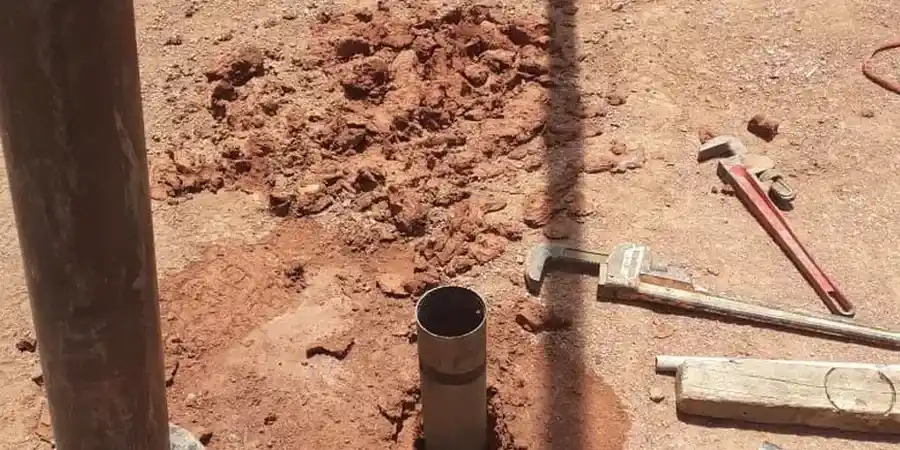
Practitioners in New Mexico generally follow standards established by ASTM International, which are adopted by reference in the New Mexico Commercial Building Code. Key specifications include ASTM D1556 for the field density test (sand cone method), a critical tool for verifying engineered fill compaction, and ASTM D1194 for the plate load test (PLT), which directly measures the bearing capacity and deformation characteristics of a soil mass. For rock mass characterization, especially in the mountainous areas east of the city, standards for the field permeability test (Lefranc/Lugeon) guide the assessment of fracture flow, a crucial factor for dams, tunnels, and deep excavations. Adherence to these consensus documents ensures that data is legally defensible and accepted by local review agencies.
The applications for in-situ testing in the Albuquerque metro area span a wide spectrum of construction and infrastructure projects. Before a commercial building rises in Uptown or a new subdivision breaks ground on the West Mesa, a plate load test (PLT) often provides the final validation of shallow foundation design parameters, potentially saving thousands in unnecessary deep foundations. During construction, the field density test (sand cone method) is the standard for quality assurance on every lift of compacted fill beneath roadways, parking lots, and building pads. For environmental site assessments or the design of stormwater infiltration basins, the field permeability test (Lefranc/Lugeon) provides the essential data on how water will move through the vadose zone, a parameter that cannot be reliably obtained from grain-size correlations in these variable soils.
Common questions
Why is in-situ testing preferred over laboratory testing for characterizing Albuquerque's soils?
In-situ testing evaluates soils in their natural state, preserving critical factors like confining pressure, moisture, and the macro-structure of the deposit, including gravel lenses and caliche stringers common in the Santa Fe Group. Disturbing these materials during sampling can destroy their fabric and lead to an overestimation of strength or a mischaracterization of their true permeability, making field tests more representative of actual conditions.
What is the primary difference between a plate load test and a standard penetration test for foundation design?
A standard penetration test (SPT) provides an index value for soil strength at discrete intervals, which is then correlated to bearing capacity. A plate load test is a direct, full-scale model test that loads the soil and measures its settlement response. It captures the integrated behavior of a larger soil mass, including the effects of gravel and variable cementation, yielding a more reliable modulus of subgrade reaction for shallow foundation design.
How does the local geology of the Albuquerque Basin affect field permeability test results?
The alternating layers of sands, silts, and cemented caliche in the Santa Fe Group create a highly anisotropic flow regime. A Lefranc test in a borehole measures a localized zone, while a Lugeon test in fractured rock assesses fracture connectivity. Results can vary by orders of magnitude over short vertical distances, making it essential to target specific zones of interest for accurate dewatering or infiltration system design.
What building code standards govern in-situ density testing for compacted fill in Albuquerque?
The City of Albuquerque adopts the New Mexico Commercial Building Code, which in turn references ASTM standards. The sand cone method (ASTM D1556) is the universally accepted standard for field density verification of structural fill. Test results are compared to a maximum dry density from a laboratory Proctor test (ASTM D698 or D1557) to ensure a compaction percentage, typically 95%, is achieved for structural support.