Too many Albuquerque projects stall because someone assumed uniform alluvial soils from a desk study. The Rio Grande basin hides buried channels, old irrigation laterals, and undocumented fill that only a shovel can find. An exploratory test pit gives you that direct look at the real stratigraphy without waiting on a drill rig. We log, photograph, and sample exactly what the excavator bucket exposes. For deeper refusal layers you may need an SPT drilling program, but for the first three to five meters a pit is faster and costs less. In ABQ's sandy silts and cobble lenses, seeing the contact between natural deposit and anthropogenic fill changes the foundation design immediately.
A test pit lets you see the soil fabric, color mottling, and gravel orientation in a way no split-spoon sample ever will.
Process and scope
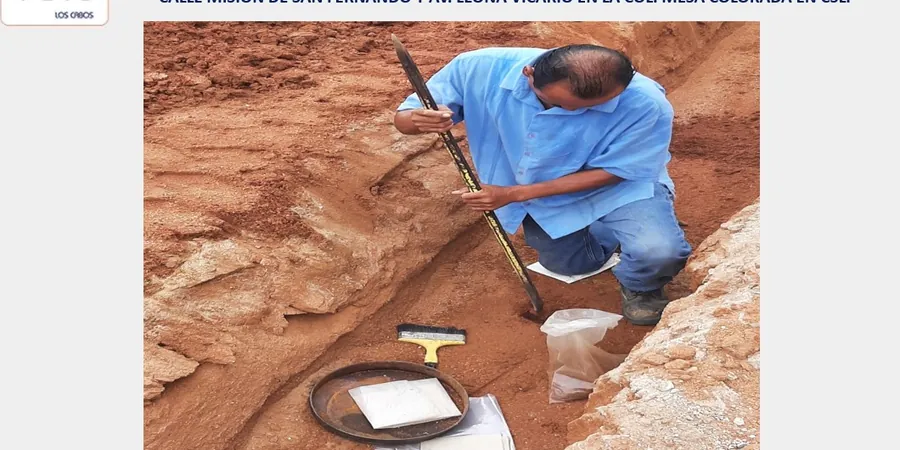
Area-specific notes
Crews in Albuquerque sometimes treat a test pit like a simple hole in the ground. That is exactly how walls collapse in sandy soils. The upper two meters of ABQ's alluvium can be cohesionless SM with zero stand-up time. A vertical cut in that material fails without warning. We enforce OSHA Type C sloping at 1.5H:1V unless a geotechnical engineer signs off on a shored vertical face after soil classification. Another local risk is misidentifying a thin caliche crust as a massive hardpan. Only sidewall scraping tells you if it is a continuous cemented layer or a discontinuous lens. When pits encounter old irrigation infrastructure, the retaining walls design for any adjacent excavation must account for loose backfill zones that act as preferential drainage paths.
Relevant standards
ASTM D2488 – Standard Practice for Description and Identification of Soils (Visual-Manual Procedure), ASTM D2487 – Unified Soil Classification System (USCS), OSHA 29 CFR 1926 Subpart P – Excavation Safety (Type C soil requirements), IBC 2021 Section 1803 – Geotechnical Investigations
Linked services
Standard Exploratory Test Pits
Excavator-dug pits to depths of 3 to 5 meters with sidewall logging, Munsell color description, and bulk sampling per ASTM D2488. Typical for foundation subgrade verification in the ABQ basin.
Fill and Debris Documentation
Photographic logging and thickness mapping of undocumented fill, construction debris, or old landfill material. Critical for infill lots in the North Valley and downtown redevelopment zones.
Utility Corridor Logging
Linear trench observation for water line or sewer alignments. We log at station intervals and flag abrupt changes in soil type that could affect pipe bedding design.
Percolation and Infiltration Support
Combined pit logging with in-situ permeability testing in the pit floor. Useful for stormwater infiltration BMPs where ABQ's silty sands require field verification of percolation rates.
Typical parameters
Common questions
How deep can an exploratory test pit go in Albuquerque soils?
Standard excavator reach limits us to about five meters. Beyond that we need benching and a larger machine, or we switch to an SPT drill rig. The actual limit depends on the stand-up time of the soil: cohesionless SM sands in the Rio Grande basin cannot hold a vertical face for more than a few minutes, so OSHA Type C sloping at 1.5H:1V governs the safe depth for a single pit.
What is the cost range for a test pit in the Albuquerque metro area?
The total cost typically falls between US$490 and US$920 per pit, which includes the excavator with operator, the geotechnical engineer on site for logging and sampling, and the written report with the stratigraphic log. The final number depends on depth, access constraints, and the number of samples taken for lab testing.
Can a test pit replace a soil boring for foundation design?
It depends on the depth of influence of the foundation. For shallow footings and slabs-on-grade, a test pit that reaches below the bearing level provides excellent direct information. For deep foundations or where the load influence extends below the maximum pit depth, the test pit complements but does not replace a boring program. In ABQ, we often use pits to verify the upper three meters and borings to characterize the deeper alluvial sequence.
How do you handle groundwater encountered in a test pit?
If the pit intercepts the water table, we record the depth of seepage first appearance and, after a stabilization period of at least 24 hours, the final water level. We take a water sample if chemical analysis is required for concrete exposure class. For percolation testing, we run a falling-head test directly in the pit floor before backfilling.